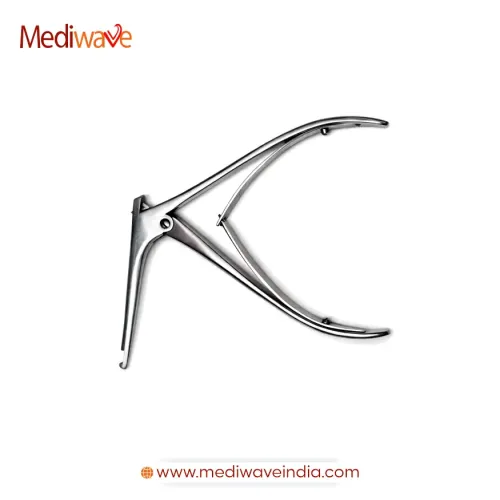
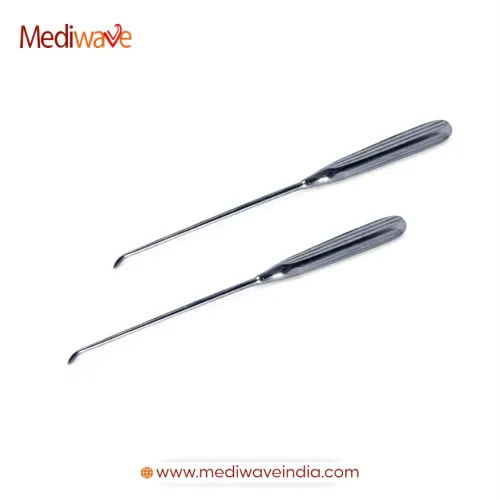
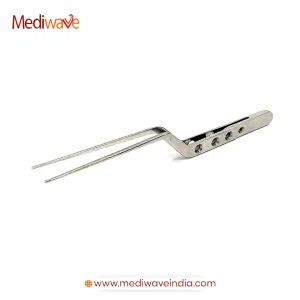
The best Neurosurgery Instruments Manufacturers in India design and manufacture instruments that aid in an accurate procedure of the brain and spine in a controlled surgical setup. Their production strategy is based on dimensional precision, non-aggressive surface finishing, and a balance of handling to satisfy the neurosurgical requirements. Intervention devices like neurosurgical forceps tools are designed under rigorous quality control measures, which makes them consistent, repeatable, and reliable in their use by hospitals that treat complicated neurological cases.
These manufacturers emphasize material science and process validation in the process of minimizing risk during intraoperative procedures and enhancing surgical control. Such tools as stainless steel neurosurgical forceps are corrosion-resistant, strong, and can be used to sterilize repeatedly without deformation. Functional testing, controlled inspection phases, and batch traceability assist the manufacturing companies to provide high-quality neurosurgery equipment that can be depended upon to perform long procedures and other critical neurological surgeries in the advanced hospital operating theatre units.
Manufacturing Focus Areas:
| Parameter | Specification |
|---|---|
| Material | Medical-grade Stainless Steel |
| Surface Finish | Satin / Matte / Polished finish |
| Corrosion Resistance | High resistance to corrosion |
| Sterilization Compatibility | Autoclave compatible |
| Precision | High-precision design for delicate procedures |
| Reusability | Reusable after proper sterilization |
| Durability | Long service life under surgical use |
| Application | Neurosurgical and spinal surgical procedures |
Best Neurosurgery Instruments Suppliers in India have assisted hospitals and surgery centers to be able to have a constant flow of pure instruments that are required in complicated neurological procedures. The suppliers target quality sourcing, correct packaging, and reliable delivery schedules. They are used to ensure that healthcare facilities avoid any delays, have the instruments needed, and ensure the smooth operation of the workflow in the operating rooms during the critical neurosurgical operations due to the strict adherence to clinical standards and inventory preparedness.
The top Neurosurgery Instruments Exporters in India provide the world with the best in terms of quality and sterility of the equipment they provide to various hospitals worldwide and other distributors. All the goods that are exported are thoroughly tested in terms of long life, precision, and ease of handling. The reliability of export business ensures that instruments that are ready to be utilized in clinical practice are directed to the surgeons to carry out more sensitive neurosurgical operations with assurance in any of the vast healthcare environments worldwide.
Advanced technology is also applied in modern neurosurgery to improve the accuracy of intricate brain and spinal cord surgical procedures. Precision of these tools is also higher, and surgeons are able to work on delicate tissues with more control and less effort. These devices can be used to achieve cutting-edge operation by reducing tissue injuries. Improved balance, grip stability, and functional reliability simplify surgical tasks and contribute to a more efficient operating room environment.
Patient safety and recovery outcomes are also supported using sophisticated tools. Fewer surgical errors, controlled handling of tissues, and uniform performance of instruments will assist in the reduction of the risk of complications. State-of-the-art designs can be used with the current surgical methods and help surgeons operate efficiently under severe circumstances. All in all, the quality of neurosurgery equipment leads to a decrease in procedure time, a rise in procedural confidence, and more consistent outcomes of postoperative patient care.
Balance, the orientation of the tip, and the sense of touch should receive special consideration when making neurosurgical equipment. Every curve and joint is aimed at producing movement control in a limited surgical area.Design accuracy assists the surgeon in having a consistent grip over processes that last a long time. These concerns are vital to those instruments that are categorized under neurosurgical forceps OT instruments, whose precision indirectly influences the safety of surgery and the success of the surgical process.
Another key design factor is visibility and maneuverability during deep surgical access. Slim profiles and refined working ends allow surgeons to operate without obstructing the field of view. Proper weight distribution minimizes tremor and improves stability.This careful engineering is a guarantee that the brain surgery forceps may be employed even in the most difficult cranial surgery that requires an unbelievable level of control.
Neurosurgical safe handling practices minimize the harm and cross-contamination risks. This is because staff training is directed to proper passing and movement, as well as safe gripping methods. These precautions are beneficial to both the surgical teams and patients. The knowledge of the neurosurgical forceps applications aids in reducing the number of mistakes that happen during the procedure by ensuring that the instruments are used according to the planned clinical use.
Barrier protection and standardization in workflow also help to increase safety in working with instruments.When handling sharp and delicate instruments such as neurosurgical forceps instruments, even slight mishandling would result in contamination or a breach of procedural sterility in the operating theatre, and the use of trays, neutral zones and visual checks can alleviate the risk of such accidents happening.
Sophisticated ergonomics, balance, and micro-precision tips are now known to be part of modern neurosurgery tools to facilitate complicated brain surgeries. The high level of machining eliminates the hand fatigue in case of long operations, as well as enhancing control. Such developments are particularly apparent in the neurosurgical forceps surgical tools that can provide smoother joint operation and more tactile feedback in aiding safer work on delicate neural structures.
Other areas of innovation include compatibility of operating rooms and workflow efficiency. The instruments will be manufactured to fit well into sterilization and surgical designs. Surface finishes make surfaces less glare-inducing. Through such upgrades, neurosurgical forceps OT instruments become more dependable in high-pressure settings, which guarantees precision in neurosurgical instruments without their loss across challenging neurosurgical procedures.
Neurosurgery tools are characterized by accuracy, hand dexterity and restraint in the use of force. They are designed to allow correct handling of the tissues and limit trauma. Fine tips and stable grips are other features that are essential in critical procedures. These are the key features of brain surgery forceps, which should work consistently when involving the very sensitive tissue without damaging the neighboring neural tissues.
Predictable performance and confidence in the surgeon is also important clinically. Devices with high response to the hand movement enhance efficiency of procedures and patient safety. Quality of construction is used so that there is uniformity when there is repetition. It is particularly important in the case of brain tissue forceps where any slight deviation may affect the outcomes of surgery and post-surgery recovery.
The choice of material directly affects the safety and lifespan of neurosurgical instruments. Alloys with high grades are selected due to their strength, corrosion resistance as well as stability during sterilization. The properties are particularly significant with respect to stainless steel neurosurgical forceps, which require repeated autoclaving under the condition that it should not compromise the surface integrity or mechanical accuracy during critical surgical operations.
Material consistency is used to guarantee the consistency in the performance of instrument batches. There is controlled hardness level to avoid bending and fine-tips to ensure flexibility. This balance provides the neurosurgical forceps instruments, which enables the surgeon to have a fine handling of the tissues, without damaging durability and the long term working ability of the instruments in the clinical setting.
The instruments of neurosurgery applied in cranial procedures are designed in a way that they enable accurate access to the brain structures with minimal tissue disturbance. These tools promote stabilized grasping, cutting, and placement in the operating room. The instruments such as brain surgery forceps are usually chosen because they are easy to manipulate and the fine points, where the surgeon can safely and accurately work with fine brain tissues.
Spinal neurosurgery requires instruments capable of working within narrow operative fields while maintaining strength and precision. Instrument length, tip profile, and grip control are carefully matched to spinal anatomy. In this setting, neurosurgical forceps OT instruments play a vital role in controlled tissue handling, supporting surgical accuracy and reducing procedural risks.
The instruments must be well-maintained to ensure that they preserve their accuracy, orientation, and integrity of the surfaces of the neurosurgery instruments when used in the field of clinical practice over a long period. Cleaning that occurs after the procedure removes biological residue, which may lead to further harm to fine joints and tips. Such tools as stainless steel neurosurgical forceps where they are to be washed in neutral pH solutions and have to be thoroughly washed so as not to corrode or lose mechanical precision on repeated surgical procedures.
Routine checks and frequent maintenance assistance in detecting the initial evidence of wear, misalignments, or stiffness of joints before the effects can compromise diagnostic performance. Metal fatigue and friction is minimized by lubrication of hinges and by packaging during sterilization. Following validated measures guarantees that neurosurgical forceps are used uniformly in all procedures and these measures will increase the confidence of the surgeon and patient safety in high-risk neurosurgical settings.
Neurological surgery Hospitals and surgery centers find it easy to apply surgical equipment in neurology due to high accuracy and consistency that is required when it comes to neurosurgery.The emphasis on quality checks, material validation and functional test will give Mediwave an edge on long term clinical reliability. The equipments are made to allow repetitive sterilization without affecting the functionality.Medical neurosurgical forceps are some products that are believed to be resistant to balance, ergonomic handling, and adherence to the international healthcare standards which makes it to be applicable in domestic as well as export based purchasing requirements.
Take the next step towards safer procedures and dependable surgical outcomes with Mediwave.
Mediwave provides accuracy tools used in neurosurgery such as retractors, forceps, and scalpels that are used in sensitive surgeries.
Yes! They are not only resistant to corrosion, but also very strong and set in such a way that they can perform neurosurgical procedures with much precision and safety.
Definitely! Mediwave provides neurosurgery equipment to fulfill the requirements of your hospital in order to deliver the best surgical outcomes.
Need help?
+91-9888041825Upgrade Your Medical Supplies With Precision Surgical Instruments. Get in Touch.
Call Us Anytime 24/7
+91-9888041825