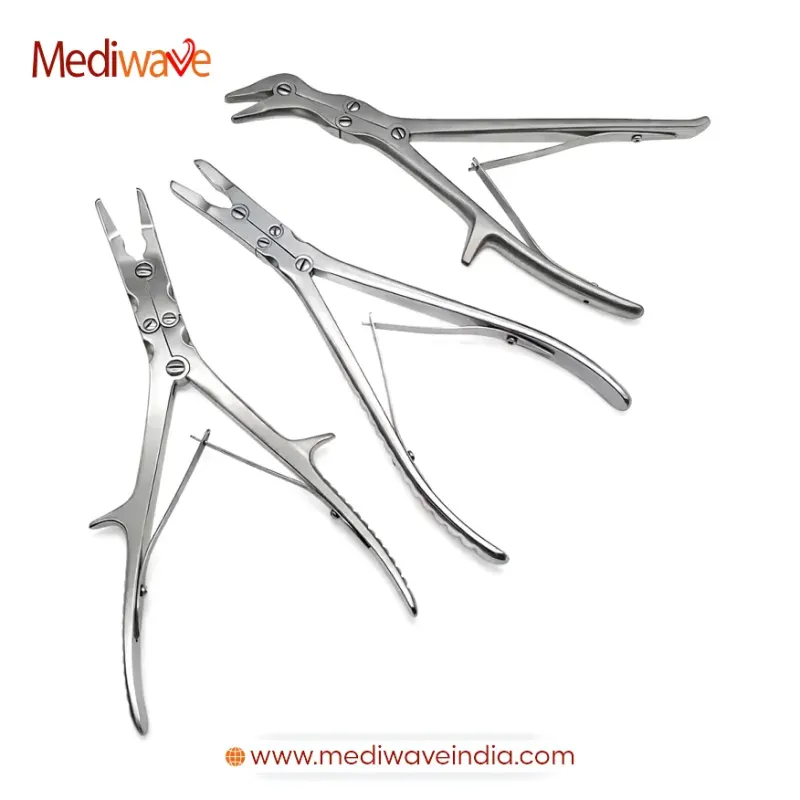
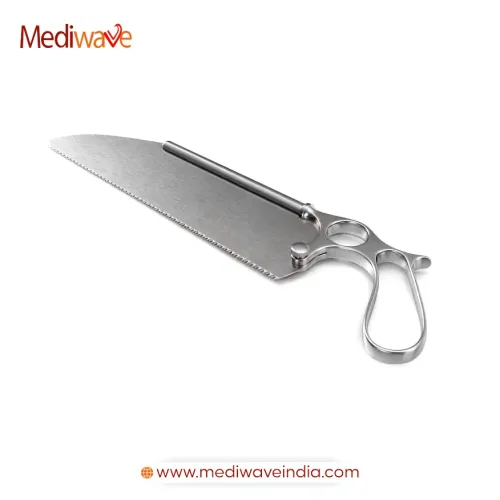
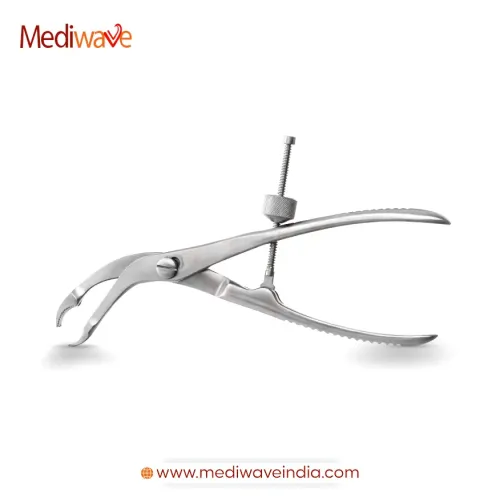
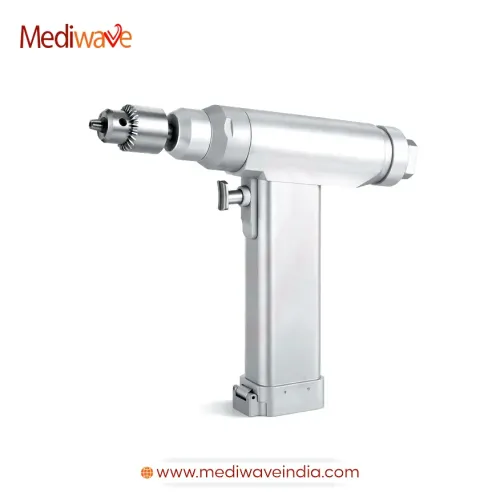
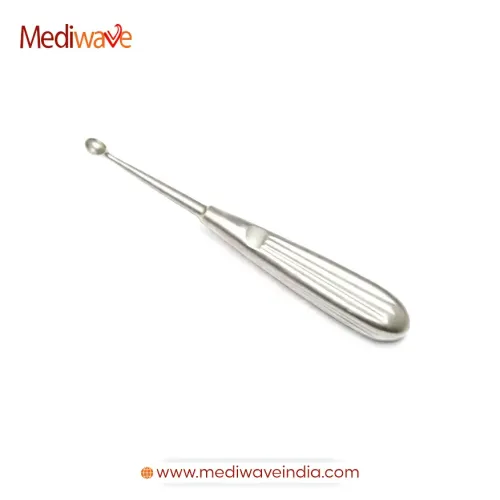
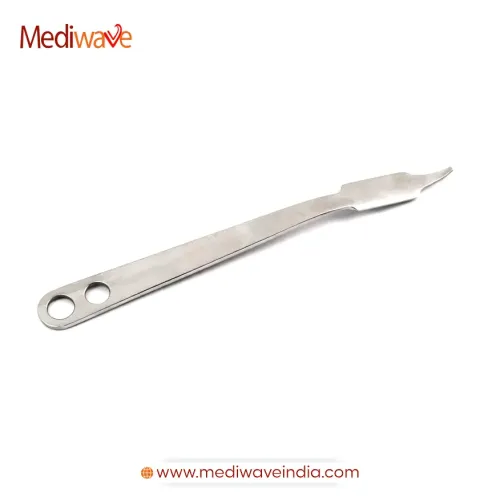
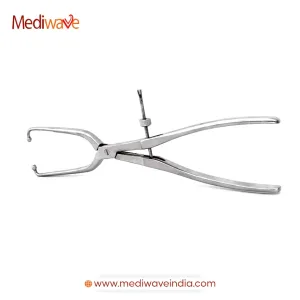
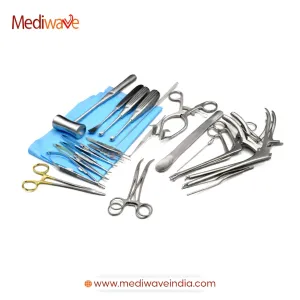
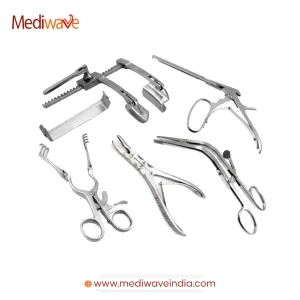
Hospitals and surgical centers are dependent on Trauma and Spine Instrument Manufacturers in India that introduce topics related to actual surgical workflows. Manufacturers focus on precision machining, tight tolerances, and materials suitable for repeated sterilization, providing instruments with functional accuracy and dimensional stability over long-term clinical use.
In addition to providing instruments suitable for trauma and spinal surgery, manufacturers focus on Ergonomic Balance and Compatibility with surgical procedures. Thus, instruments have been developed to support spinal fixation, decompression of intraoperative spinal cord injuries, and stabilization of traumatic injuries while meeting international standards of quality. Manufacturers take this approach to help procurement teams acquire instruments that offer dependable performance and compliance with all appropriate regulatory requirements without sacrificing performance.
The instruments required for trauma and spine procedures are designed to be very predictable to mechanical factors. They must be very controlled with regard to force, stability, and feedback. Engineering precision greatly increases surgical performance by improving accuracy and efficiency, and in turn, the long-term performance of the implants during complex procedures.
The design parameters include sufficient load-bearing capacity, corrosion resistance, and compatibility with current spinal techniques. Instrument handles and associated surface finishes are designed to be comfortable for all users, even during lengthy surgeries, and provide the necessary level of fine control for critical intraoperative events.
The right instruments also influence procedural flow and surgeon endurance. Balanced designs, predictable torque response, and increased anatomical compatibility reduce excessive hand exertion and repetitive modifications. The reliability of instruments provides consistency of intraoperative workflows and enables institutions to achieve consistent patient outcomes regardless of surgeon, case complexity, or level of surgery.
| Parameter | Specification |
|---|---|
| Brand | Mediwave |
| Material | Medical-grade Stainless Steel / Titanium |
| Finish | Mirror / Matte |
| Components | Plates, Screws, Rods, Clamps, Forceps, Elevators, and other trauma & spine tools (varies by type) |
| Handle | Ergonomic, slip-resistant |
| Packaging | Sterilizable tray / box, OEM / Private Label available |
| Sterilization | Autoclave, ETO, Chemical Sterilization |
| Usage | Trauma, spinal, orthopedic, and surgical procedures |
| Quality Standards | ISO 13485 certified |
| Compliance | CE / FDA where applicable |
As a leading Suppliers & Exporters of Trauma & Spine Instruments in India We provide the most comprehensive selection of Trauma & Spine Instrumentations to numerous healthcare facilities across India as well as abroad. All Trauma and Spine Instrumentations we manufacture conform to International Standards and Regulations. Our Trauma and Spine Instrumentations are manufactured from high-quality stainless steel alloys that are long-lasting, durable, and resist corrosion and wear. They not only meet the demands of India's Market, but also Export to Global Markets while manufacturing Instruments that conform to the Regulations Required by all developing and Developed Countries in the World.
The diverse array of surgical tools required in spinal surgery includes decompression, fixation, exposure, and alignment. Each tool has an assigned function and supports a seamless workflow. With the stringent classification of tools, surgical delays, surplus instrument exchanges, and unstructured workflow in complex spinal surgeries are all minimized.
Coordination in the operating room is also enhanced through the various instrument systems. With efficient classification, instrument setup time is reduced, identification of systems is streamlined, and cooperation among surgeons, the scrub team, and the sterilizing team is enhanced. This system is especially valuable in spine surgeries and in particular, multi-level or revision surgeries, where time is of the essence and where an unstructured system has the potential to compromise patient safety.
During trauma surgery, there is a cross-section of injuries that can be unintentionally sustained and that call for immediate surgical intervention to stabilize. Tools of orthopedic trauma surgery are designed to bear significant axial and lateral loading while maintaining manual control. Strength, durability, and functional reliability are critical under time constraints to manage fractured and dislocated bones and other unstable anatomical structures.
These tools assist with the reduction of fractures, preparation of bones, and stabilization, whether temporary or permanent. The designs focus on the rapid ability to be used with no compromise to attention to detail, allowing surgical teams to deploy in emergency situations in accordance with procedural discipline and the safety of the patient.
Widely Used Trauma Instruments
The importance of reliable supply chains cannot be overstated with regard to surgical preparedness. Hospitals rely on the availability of trauma and spine instruments on a consistent basis for both routine and unplanned surgeries. Any interruption of availability directly impacts the scheduling of operating rooms, the deployment of and use of surgical teams, and the continuity of surgical procedures.
The increasingly robust global demand for spine surgery has resulted in an increased need for rapid, flexible manufacturing coupled with standardized logistics. Well developed supply chain systems allow healthcare systems to meet their compliance, quality, and documentation needs both domestically and internationally while providing for a complete range of inventory.
Mediwave has designed its surgical instruments to be highly controllable and predictable throughout all phases of spine surgery. Working with equal and consistent precision on the working tips will allow for balanced control while performing surgical procedures, including fixation, alignment, decompression and other procedures associated with spinal surgery. All these features support performing accurate spinal surgeries, even in challenging cases.
Healthcare institutions can also experience controlled workflows and avoid frequent replacement of instruments and high operational costs by sterilizing the instruments and extending their life cycle. The durable construction and materials also add to the long service life of the instruments.
Providing quality and durable medical instruments to the market is a daunting and challenging task, but the Mediwave managerial teams seem to be getting the hang of ensuring the instruments are manufactured in accordance with international medical device quality and hospital audit applicable standards of the various markets of medical care.
Mediwave instruments comply with the set quality standards and regulations, and so do the other medical care services equipped with Mediwave instruments.
The routine inspections, materials verification, and thorough process monitoring are not done with the intention of establishing and ensuring better uniformity in quality from one batch of instruments to another. These measures are aimed to provide the procurement teams with any assurance they may require to trust, trace, and rely on the instruments and to ensure that, in the long run, the regulatory standards that govern the provision of medical instruments will not be violated.
Orthopedic trauma, degenerative spine surgery, and spinal stabilization procedures involve the use of trauma and spine instruments. Instruments are designed to address varying anatomical challenges while providing the necessary accuracy and control throughout a variety of surgical techniques and conditions.
Specialty-specific use cases streamline processes and enhance the predictability of the surgical outcomes. The appropriate instruments empower surgical teams to effectively handle routine, complicated, and revision cases, providing procedural clarity and confidence.
Specialty Applications
The foundation of risk management for Trauma and Spine Surgery relies upon the use of quality instruments. Quality Assurance procedures decrease the risk of instruments failing during surgery, resulting in misalignment or poor handling of instruments that can jeopardize patient safety and success of the procedure.
Hospitals favor suppliers with a track record of consistent quality. Quality instruments that are integrated into surgical workflows provide operational confidence and quality audit support across the facility.
Mediwave meets the needs of hospitals and distributors concerning structured procurement processes. Mediwave's surgical instrument orders may be adapted based on primary specifications and custom clinical focus, and will also have systems for ordering that align with each institution's purchasing and procurement systems.
By building a long-term supply of high-quality instruments on an ongoing basis, all facilities experience reduced disruption in their surgical suites and the ability to consistently utilize standardized surgical instruments across multiple healthcare facilities, thus creating predictable costs associated with purchasing, improving inventory management, continuing supply of high-quality surgical instruments, and delivering high-quality patient care over the long term.
The criteria used by health care providers in selecting Mediwave as a vendor is largely based on the disciplined function-first manufacturing philosophy offered by Mediwave. Unlike other companies that favor volume-driven production, Mediwave focuses on accuracy, consistency and compliance, ensuring that the instruments meet the real demands of surgery as opposed to generic cut and paste specifications.
The surgical instruments and the applicable Mediwave surgical instruments and the applicable surgical techniques are in synchronous harmony. This Mediwave/MRT philosophy partnership is the cornerstone of trust that allows Mediwave to be a partner of choice to the hospitals and distributors who require a steady and reliable performance of trauma and spine instruments across a wide range of clinical applications.
Trust & Reliability Factors
Plan Your Trauma & Spine Instrument Requirements with Mediwave
These instruments support stabilization and intervention in trauma and spinal procedures.
We apply strict quality checks and material controls to support dependable performance.
Yes, they are made of durable and stable materials with clinical performance.
Need help?
+91-9888041825Upgrade Your Medical Supplies With Precision Surgical Instruments. Get in Touch.
Call Us Anytime 24/7
+91-9888041825